30% of large vessels are built with CSCAM's E-NEST. Solve the entire automatic nesting process for shipbuilding and metal fabrication with a single software.
When building ships or steel structures, hundreds to thousands of metal parts (plates, profiles, flat bars) are cut from steel plates. At this time, how closely the parts are arranged on the steel plate is directly related to raw material loss. This arrangement process is called nesting.
Plates, profiles, and flat bars all have different shapes. Manually arranging hundreds of parts lowers steel utilization and increases scraps. In shipbuilding and metal fabrication, material cost account for a large portion of the total cost, so arrangement efficiency is directly linked to profitability.
If the cutting sequence is incorrect, heat accumulates on the steel plate, causing the parts to warp. This leads to rework/defects and delays post-processing schedules.
Transferring part data created in design CAD to cutting equipment error-free via the DNC system is tedious and has a high risk of omission when done manually.
It is more than a layout tool. Three core libraries designed around industrial requirements complete E-NEST.
When nesting hundreds of parts on a single steel plate, the computer automatically finds the optimal nesting to minimize material waste using a Genetic Algorithm.
Nesting efficiency is directly related to profit. Algorithm performance extracts more parts from a single plate, reducing remnants and inventory materials.
After cutting the steel plate, complex scraps with holes remain. The computer accurately calculates and stores this complex remnant shape.
When fabricating small parts, E-NEST automatically nests them on saved scrap shapes instead of using a new steel plate, maximizing recycling and saving material costs.
The marking equipment must engrave identification text on each part of the steel plate. E-NEST automatically arranges the text so they do not overlap each other or spill outside the part boundaries.
If the text is unreadable, parts cannot be identified during on-site assembly. Without this function, marking errors directly lead to assembly errors.
Both editions are optimized for different production environments. Select the version that best fits your workflow.
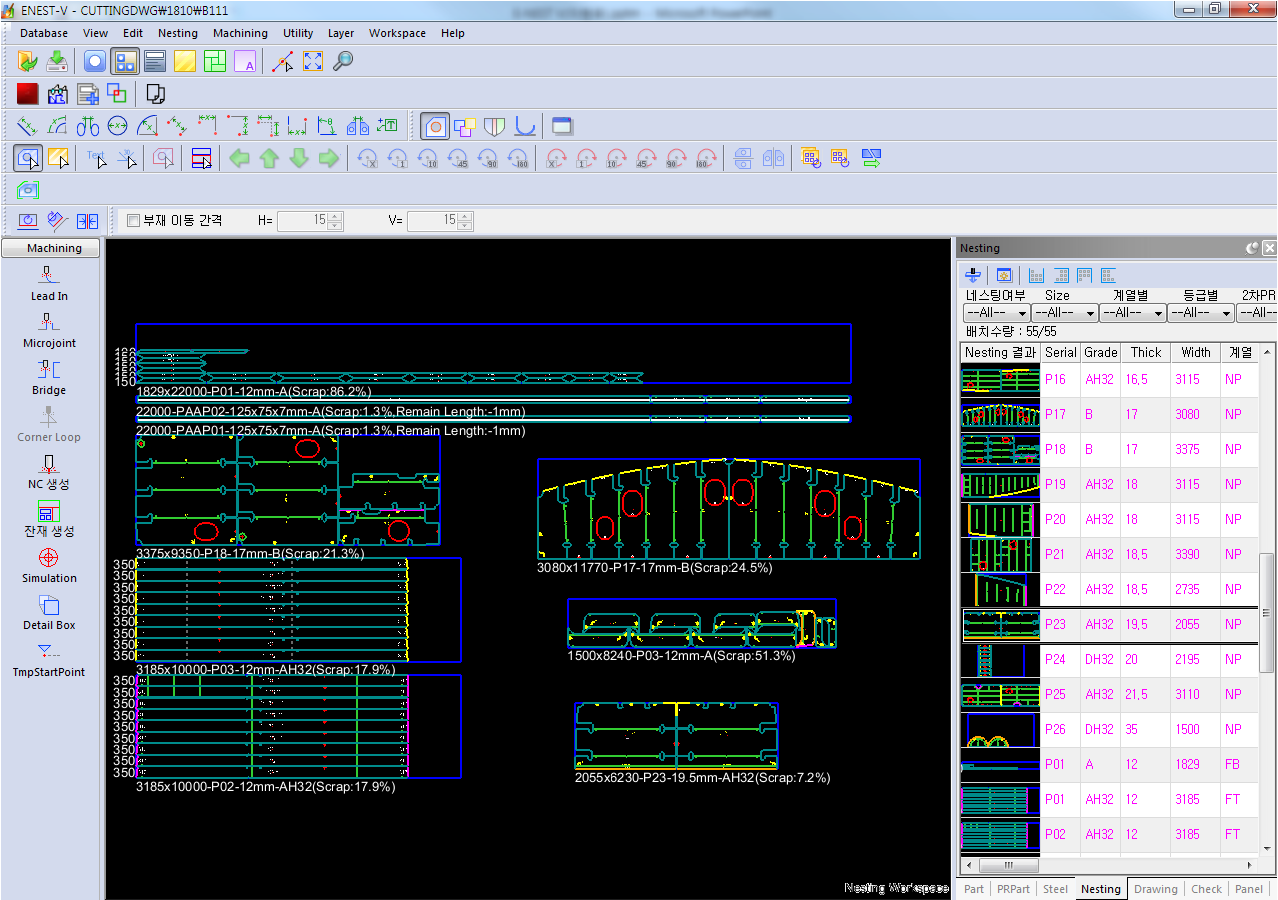
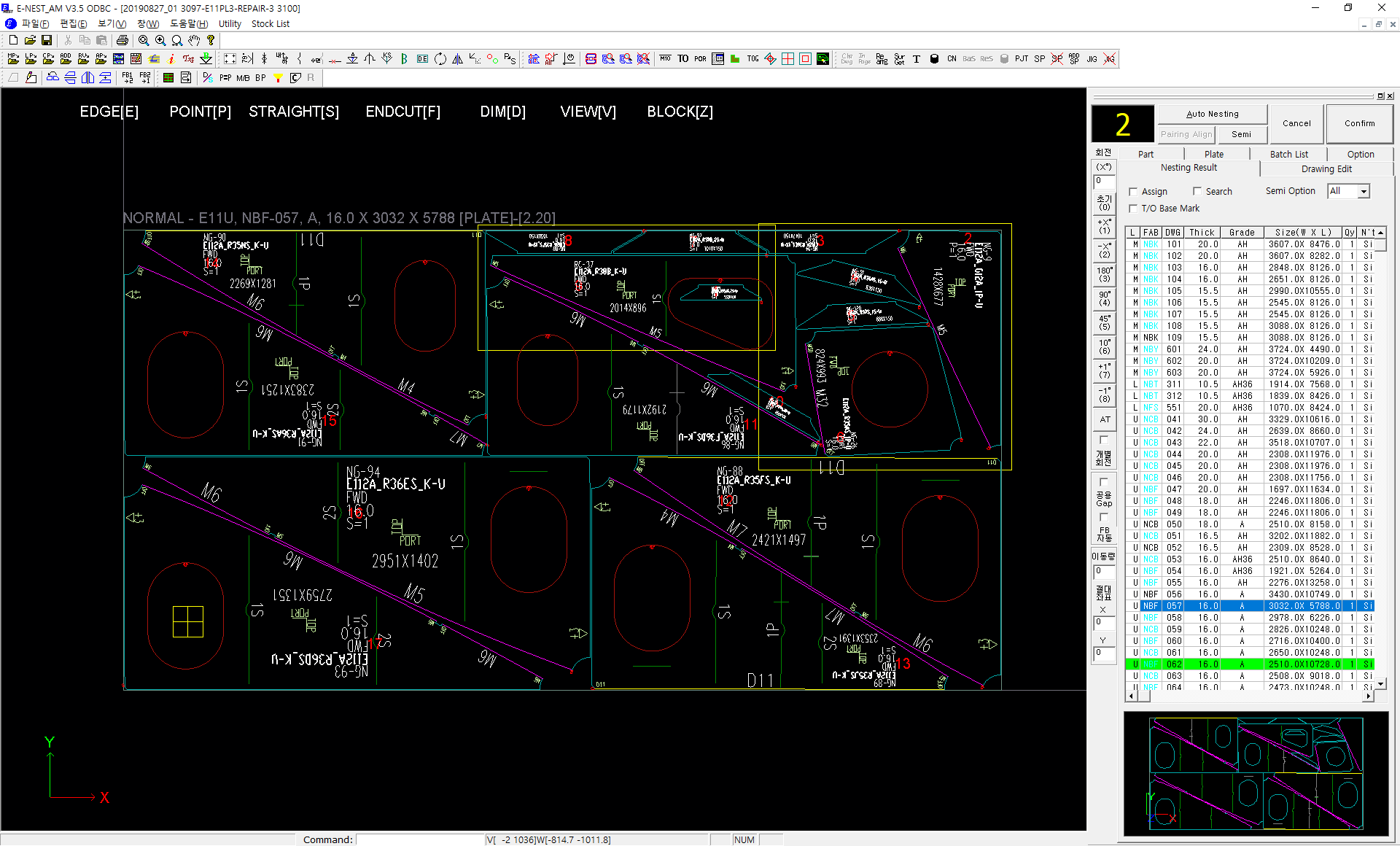
Shipbuilding Edition with AM & Tribon Integration
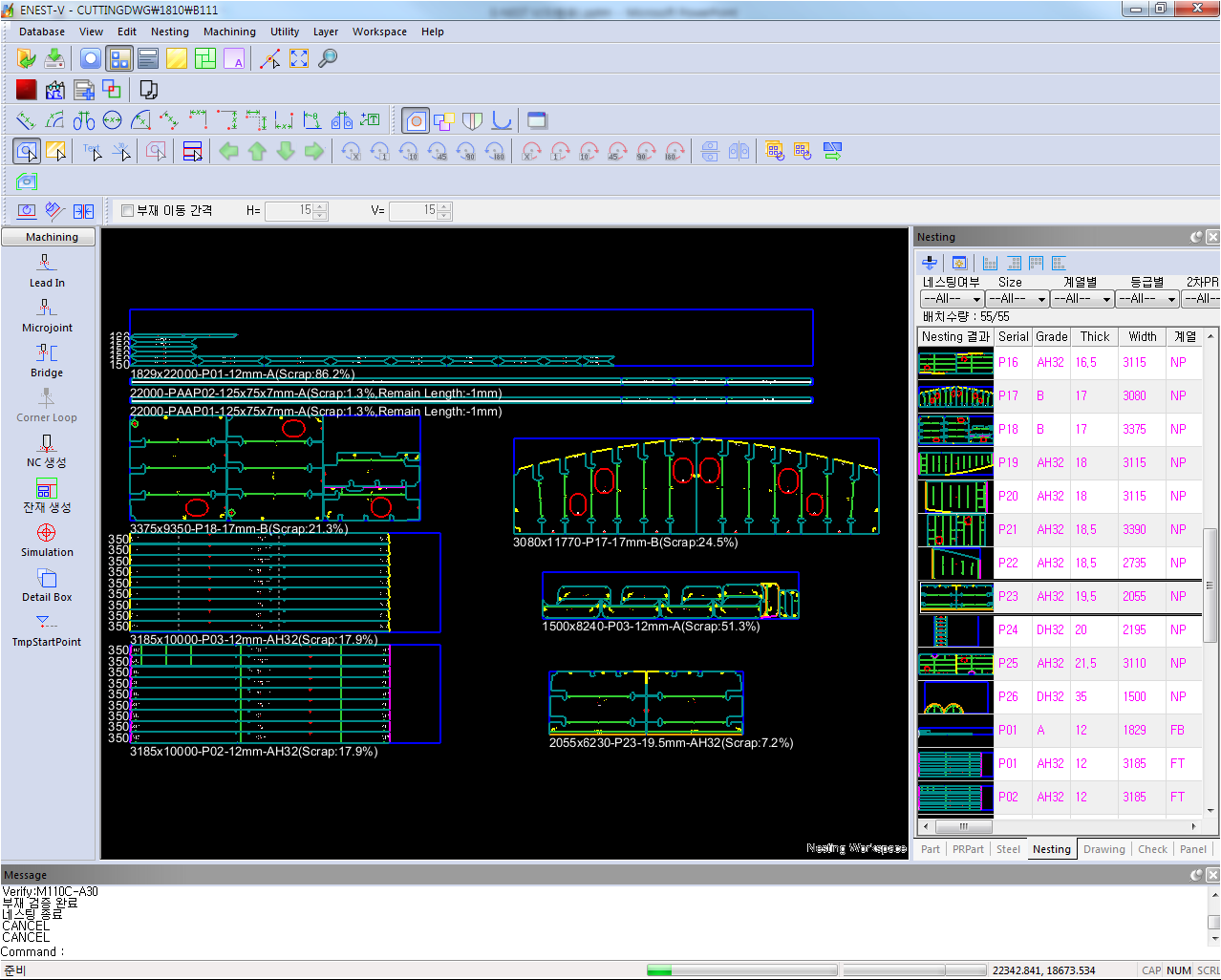
Next-Gen Standalone Universal Edition
Receives design data and automatically generates cutting NC data and drawings.
Completes part information from CAD loading, 2D sketch editing, beveling settings, to text and symbol placement.
Optimized nesting algorithms trigger for plates, flat bars, and profiles. Also supports manual/semi-auto nesting.
Automatically determines cutting sequence to minimize thermal distortion. Verifies before actual cutting via NC simulation.
Transfers cutting NC data (ESSI/EIA) to DNC and outputs cutting plans & detailed drawings in PDF/DXF formats.
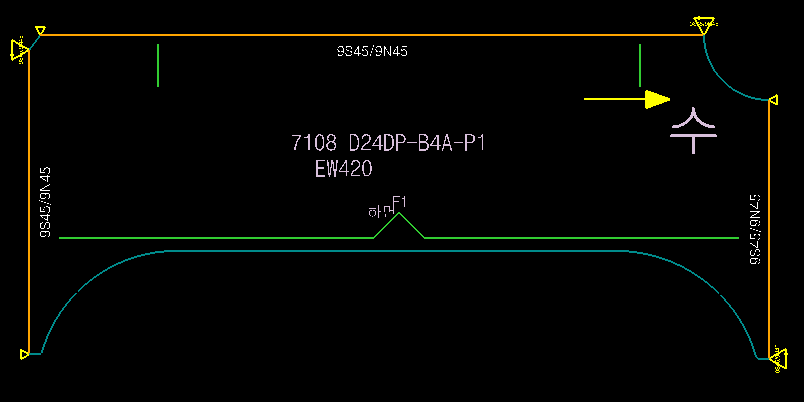
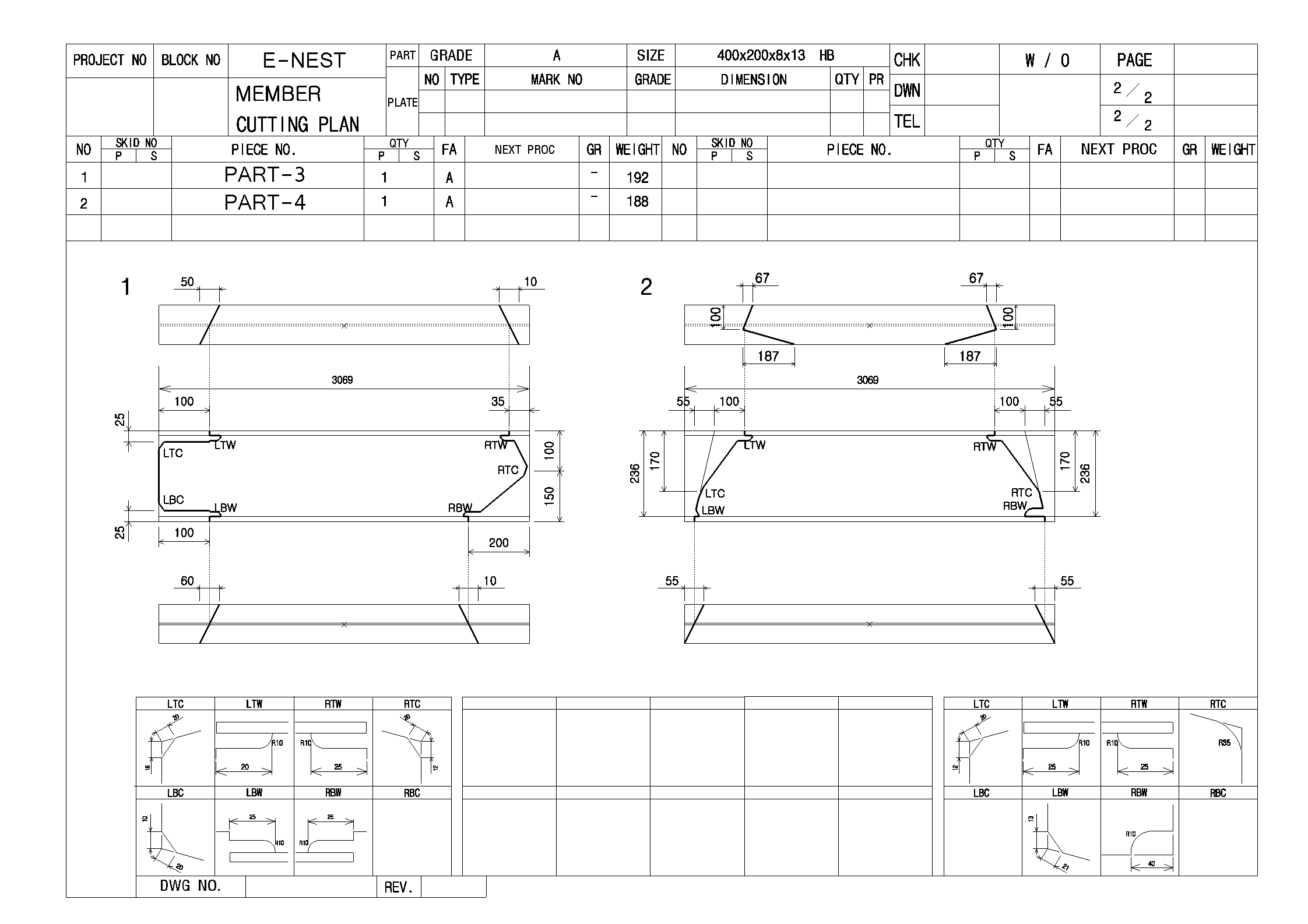
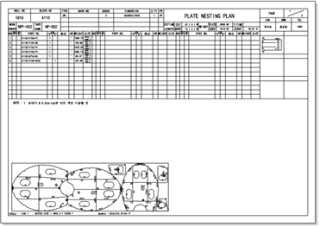
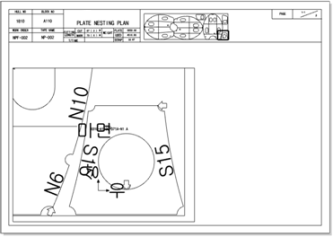
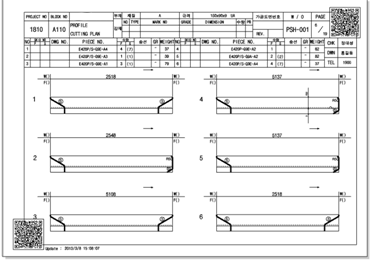
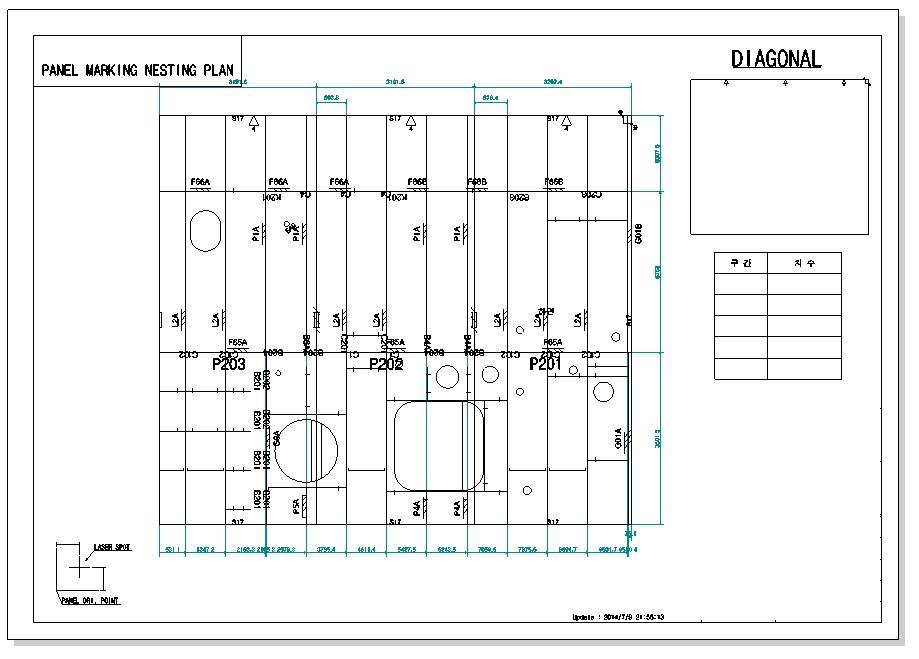
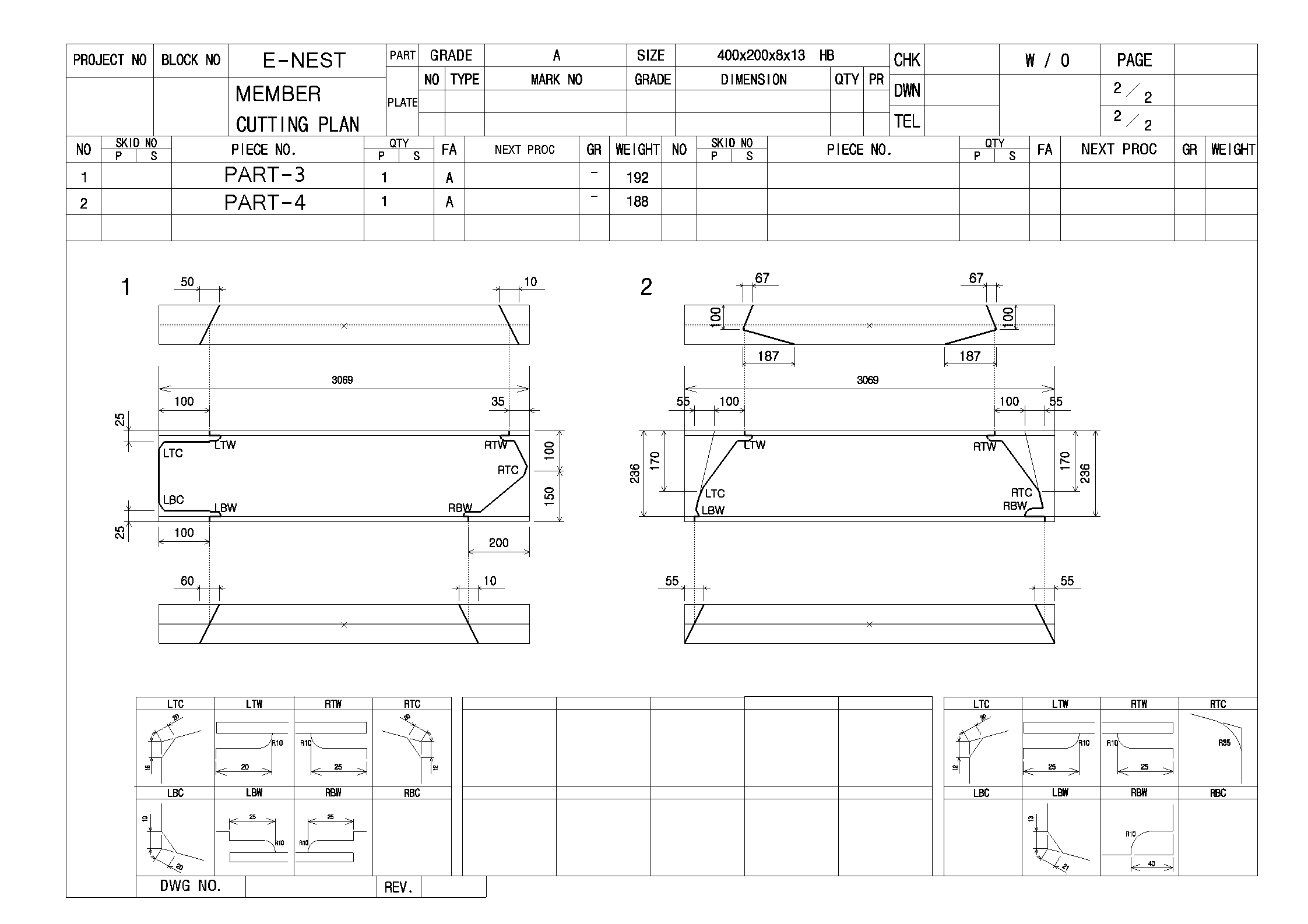
Types of drawings and plans automatically generated by E-NEST. Directly transferred to DNC systems and shops in PDF/DXF formats.
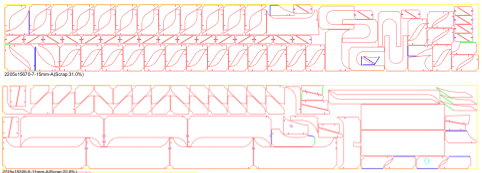
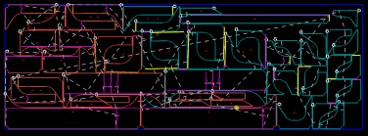
Nesting Layout Outputs
Drawing Outputs
These are the most common questions asked by engineers reviewing actual deployment.
What is the actual material utilization of auto-nesting?
Automatically optimized to increase utilization according to steel plate conditions. E-NEST auto-nesting individually optimizes patterns and pairings for plates, flat bars, and profiles based on a Genetic Algorithm. We manage utilization from the ordering stage by separating Pre-Nesting (for ordering) and Production Nesting (for actual production). Specific figures can be guided separately based on on-site steel specification conditions.
Is integration with ERP and MES possible?
Yes. We connect data received from design and production systems to NC/DWG output and DNC transfer. E-NEST reads Gen files and BOM data from AM (Aveva Marine) / ERP / PLM systems to generate parts. After determining the nesting and cutting paths, we have a pipeline that directly transfers NC data and drawings to the DNC system. The NC output format supports ESSI & EIA standards, and we also respond to environments where multiple machines are operated on the same line. The detailed scope of MES integration is separately negotiated based on site requirements.
Do we need to request the developer again if the machine changes?
Response to equipment changes is fast because NC output rules for each machine can be managed separately. E-NEST V's Post Processor is based on Lua, Python, and VBScript scripting. Because the NC output rules are separated into script files, the post-processor can be adjusted to match site conditions even if the machine changes. It also supports running multiple post-processors simultaneously.